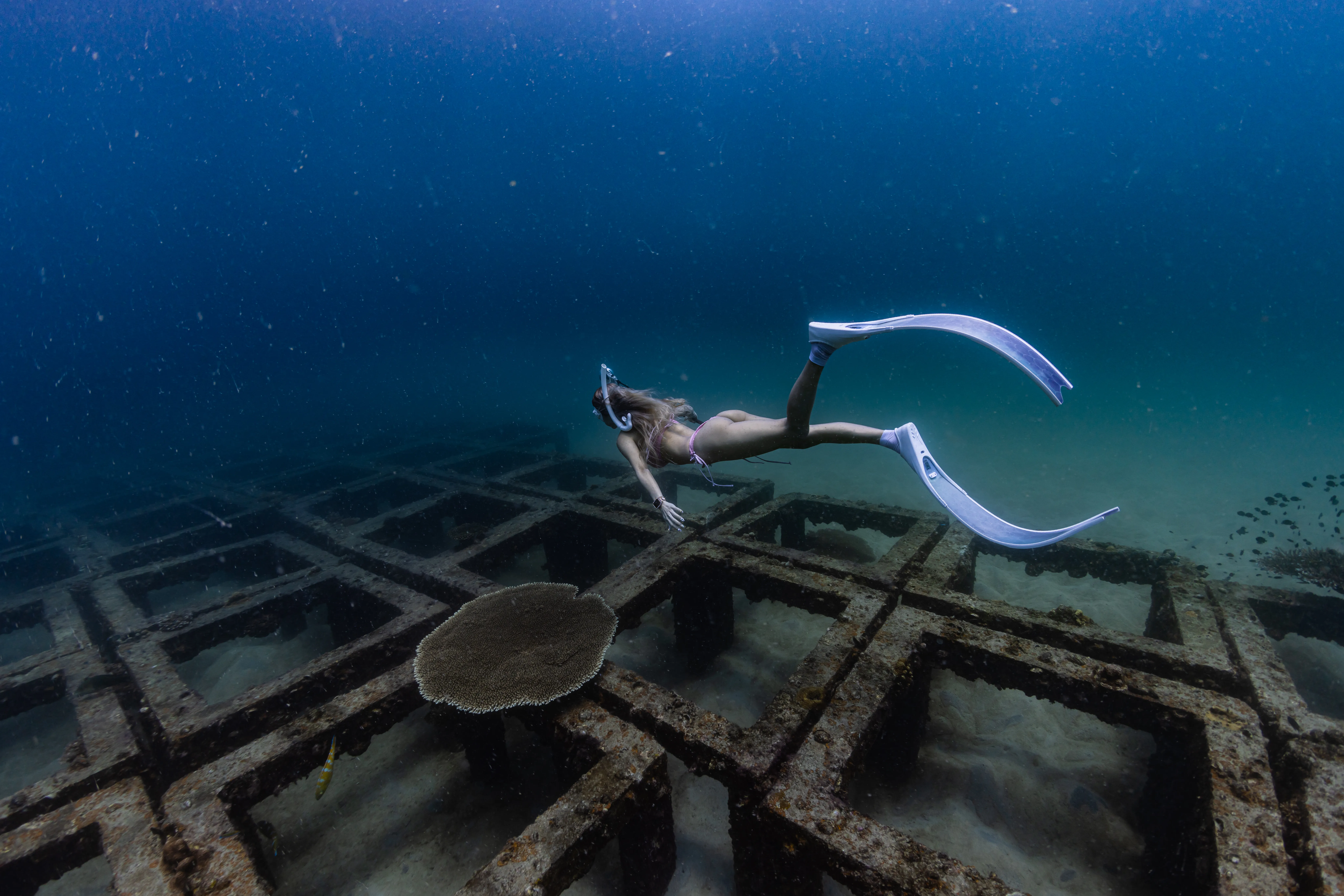
The number one question we get asked is simple: when should I come? People want clear water, calm seas, and the best possible chance of seeing marine life. The answer depends on what matters most to you, because the Gulf of Thailand does not follow the same weather patterns as the Andaman coast, and month to month conditions can vary more than most travel websites will tell you.
After years of running private boat trips from Koh Samui to sites like Sail Rock, Koh Tao, Ang Thong, and Koh Phangan, we have a pretty clear picture of what each month actually looks like underwater. This guide gives you the honest truth, including the months where we would tell you to wait if you have flexibility.
The Quick Summary
If you just want the short version: March through September offers the best underwater conditions around Koh Samui. Visibility regularly reaches 15 to 30 meters, seas are calm, and marine life is active. Within that window, March through May is the absolute prime time, with the clearest water and the best chance of whale shark encounters at Sail Rock.
Now let us break it down month by month so you can plan around your specific trip dates.
January: The Tail End of Monsoon
January in the Gulf of Thailand is a transition month. The northeast monsoon season that runs from October through December is winding down, but it has not fully let go. You can expect occasional rain, choppy seas on some days, and underwater visibility that ranges from 5 to 15 meters depending on recent weather.
The good news is that January is already much better than November or December. Boat trips to closer destinations like Koh Phangan, Koh Mat Sum, and the Five Islands are usually possible on most days. Longer crossings to Sail Rock or Koh Tao may get cancelled on rougher days, but calm windows appear regularly.
Water temperature sits around 27 to 28 degrees Celsius. Comfortable for snorkeling in a rashguard, though freedivers doing deeper dives may want a thin wetsuit.
Our honest advice: January is fine for a visit if diving is not the primary reason for your trip. You will still have enjoyable days on the water, but you are gambling a bit on conditions for the premier sites.
February: Things Start to Clear Up
February marks the real beginning of the transition into good season. Rain becomes less frequent, and the sea starts to settle. Visibility improves noticeably as the month progresses, typically reaching 10 to 20 meters by the second half of February.
This is a good time to visit if you want to avoid the peak season crowds while still getting decent conditions. Hotels and tours are slightly less busy than March through May, and prices tend to be a little lower. The reefs are healthy and active, and you can reach most sites without weather cancellations.
Water temperature rises to about 28 degrees Celsius. Seas are calm enough for Koh Tao and Sail Rock trips on most days, though it is still worth having flexibility in your schedule in case a rough day pops up.
March: Peak Season Begins
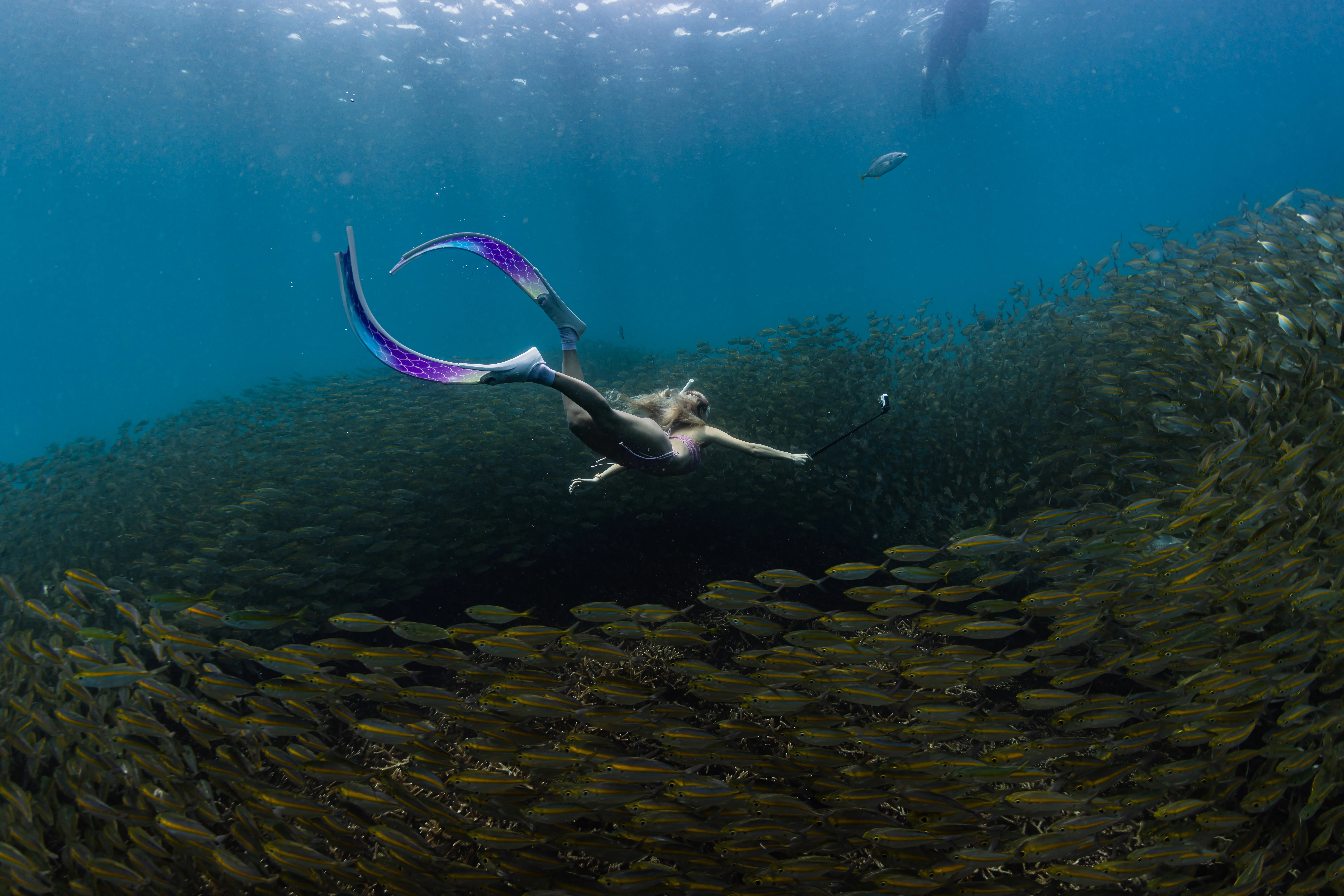
March is when the Gulf of Thailand truly shows off. The monsoon is gone, winds die down, and the water column settles into that stunning turquoise clarity that looks unreal in photos. Visibility at sites like Sail Rock regularly hits 20 to 30 meters. You can float at the surface and see divers 15 meters below you.
This is also the start of whale shark season at Sail Rock. These gentle giants pass through the Gulf of Thailand between March and May, and Sail Rock is the most reliable encounter point. Sightings are never guaranteed, but March sees the first arrivals and excitement builds among the local dive community whenever one is spotted.
Water temperature reaches 28 to 29 degrees Celsius. Seas are flat calm on most days. This is arguably the best month to visit if underwater experiences are your priority.
April: The Golden Month
April competes with March for the title of best month. Visibility remains exceptional at 20 to 30 meters, and the water temperature peaks at 29 to 30 degrees Celsius, making it warm enough that you genuinely do not need any thermal protection.
Whale shark sightings at Sail Rock tend to peak in April and May. Chumphon Pinnacle, another deepwater site accessible by boat from Koh Samui, also sees whale shark activity during this window. The combination of warm water, clear visibility, and the chance to swim with the largest fish on earth makes April an extraordinary month to be in the Gulf.
The only downside is that April is also Songkran (Thai New Year) month, which means domestic tourism spikes in the middle of the month. Book accommodation and boat trips early if you are planning an April visit.
May: Still Excellent, Fewer Crowds
May continues the run of excellent conditions. Visibility stays high at 15 to 25 meters, though you may notice occasional plankton blooms that reduce clarity at some sites. These blooms are actually good news because they attract filter feeders, including whale sharks. May is the last reliable month for whale shark encounters before they move on.
The tourist crowds thin out compared to March and April because many travelers think the rainy season has started. It has not. May in the Gulf of Thailand is mostly dry and calm. This makes it a sweet spot for visitors who want peak conditions without peak crowds.
Water temperature remains around 29 to 30 degrees Celsius.
June and July: The Calm Before the Storm
June and July bring mixed conditions. On the surface, the weather is still predominantly fine. Rain showers are more frequent than in April or May, but they tend to be short and intense rather than all day affairs. The sea stays calm enough for boat trips on most days.
Underwater, visibility ranges from 10 to 20 meters. It is not as jaw dropping as the March through May window, but it is still very good by global standards. The reefs are teeming with life, and sites like Japanese Gardens, Koh Nang Yuan, and the Ang Thong reefs are all accessible and enjoyable.
Water temperature hovers around 29 degrees Celsius. These months offer good value because hotel prices drop and boat trips are easier to book on short notice.
August and September: The Last Good Window

August and September are the tail end of the good season. Conditions are similar to June and July, with visibility typically between 8 and 18 meters and occasional rainy days. The seas can get choppier toward the end of September as the monsoon approaches.
These months are excellent for snorkeling and freediving at closer sites like Koh Phangan, the Five Islands, and Koh Mat Sum. Trips to Sail Rock and Koh Tao are still possible but depend more on daily conditions. We monitor weather patterns closely and will always advise you honestly about what is feasible on a given day.
Water temperature remains warm at 28 to 29 degrees Celsius. If you are visiting in late September, have a backup plan in case a weather system limits boat options.
October: The Monsoon Arrives
Here is where we get honest in a way that most tourism websites will not. October is the start of the northeast monsoon season in the Gulf of Thailand. Rain becomes more frequent and sustained. Seas get rough. Visibility drops to 3 to 10 meters on most days.
We do not run trips to Sail Rock, Koh Tao, or Ang Thong during the roughest weeks. Closer destinations like Koh Phangan and Koh Mat Sum may still be possible on calmer days, but cancellations are common.
If you are already on Koh Samui in October, there is still plenty to enjoy on land. The island has waterfalls swollen from rain, the jungle is at its greenest, and hotel prices are at their lowest. But if your primary goal is underwater activities, October is not your month.
November and December: Monsoon Peak
November is typically the wettest and roughest month in the Gulf. Extended periods of heavy rain, strong winds, and large swells are normal. The east coast of Koh Samui takes the brunt of it. Underwater visibility can drop to near zero at some sites.
December starts rough but usually improves in the second half of the month. By late December, you may get calm enough windows for boat trips to nearby islands, and visibility begins creeping back up to 8 to 12 meters.
We are going to be direct: if you have flexibility in your travel dates and your main interest is diving, freediving, or snorkeling, avoid November entirely. December is a gamble that sometimes pays off and sometimes does not.
Water Temperature Year Round
One thing that stays remarkably consistent in the Gulf of Thailand is water temperature. It ranges from about 27 degrees Celsius in the coolest months (January and February) to 30 degrees in the warmest (April and May). This means you can snorkel comfortably in just a swimsuit and rashguard at any time of year.
Freedivers spending extended time at depth (10 meters and below) may want a 2mm or 3mm wetsuit during the cooler months for comfort, but it is never cold enough to require serious thermal protection.
Our Recommendation
If you have full flexibility, book your trip for March or April. You will get the clearest water, the calmest seas, the warmest temperatures, and the best shot at encountering whale sharks at Sail Rock.
If those months do not work for you, February through September all offer genuinely good conditions for a private boat trip. Each month has its character, but none of them will leave you disappointed.
If you are coming during the monsoon months (October through January), you can still have a wonderful time on Koh Samui. Just set your expectations for underwater activities accordingly, and build some flexibility into your schedule so you can take advantage of calm weather windows when they appear.
Whatever month you choose, we will give you honest guidance about what is realistic for your dates. We would rather reschedule a trip than take you out in conditions that will not give you a good experience. That honesty is something we take seriously.