
The Gulf of Thailand does not always get the credit it deserves as a marine life destination. Most people associate Thailand diving with the Andaman Sea, with its dramatic walls and manta rays around the Similan Islands. But the Gulf has its own cast of characters, and when you encounter them on a single breath rather than through the bubbles of scuba gear, the experience becomes something entirely different.
Freediving gives you a unique relationship with marine animals. You are silent. You move slowly. You become part of the underwater environment rather than a noisy visitor passing through it. Animals respond to that. They are more curious, more relaxed, and more willing to stay close. Over years of guiding freediving trips from Koh Samui, we have watched these five animals become the highlights of nearly every trip.
1. Sea Turtles: The Patient Grazers
If there is one animal that almost everyone wants to see underwater, it is a sea turtle. The Gulf of Thailand is home to two species that you can encounter regularly while freediving: the hawksbill turtle and the green turtle. Both are present year round, though sightings are more frequent during the calm season from March through September when visibility is best.
Where to Find Them
Green turtles favor areas with seagrass beds, which they graze on throughout the day. The sandy patches between coral formations at Japanese Gardens near Koh Nang Yuan are one of the most reliable spots. They also frequent the reefs around the northeast side of Koh Tao, particularly at Mango Bay and Aow Leuk.
Hawksbill turtles prefer coral reefs where they feed on sponges. You will find them at Sail Rock, Chumphon Pinnacle, and the deeper reef sections around Koh Phangan. They tend to be slightly more shy than green turtles but will tolerate a quiet freediver who approaches slowly.
Behavior and Depth
Sea turtles are air breathers, so they move between the surface and the reef throughout the day. You will often spot them ascending for a breath, which gives you the chance to freedive down alongside them as they return to the bottom. Most feeding activity happens between 3 and 12 meters deep, which is well within comfortable freediving range for intermediate divers.
The key to a good turtle encounter is patience. Do not chase them. Position yourself near where they are feeding, make a calm descent, and let them come to you. A relaxed turtle will barely acknowledge your presence. A spooked one will swim away at a speed that no human can match.
2. Whale Sharks: The Gentle Giants of Sail Rock
Nothing prepares you for the first time you see a whale shark. The sheer scale of the animal overrides every expectation. They can reach 10 meters or more in length, yet they move with the gentle deliberation of a creature that knows it has no predators. Encountering one while freediving, on a single breath, with nothing between you and the animal, is one of the most profound wildlife experiences available anywhere on earth.
When and Where
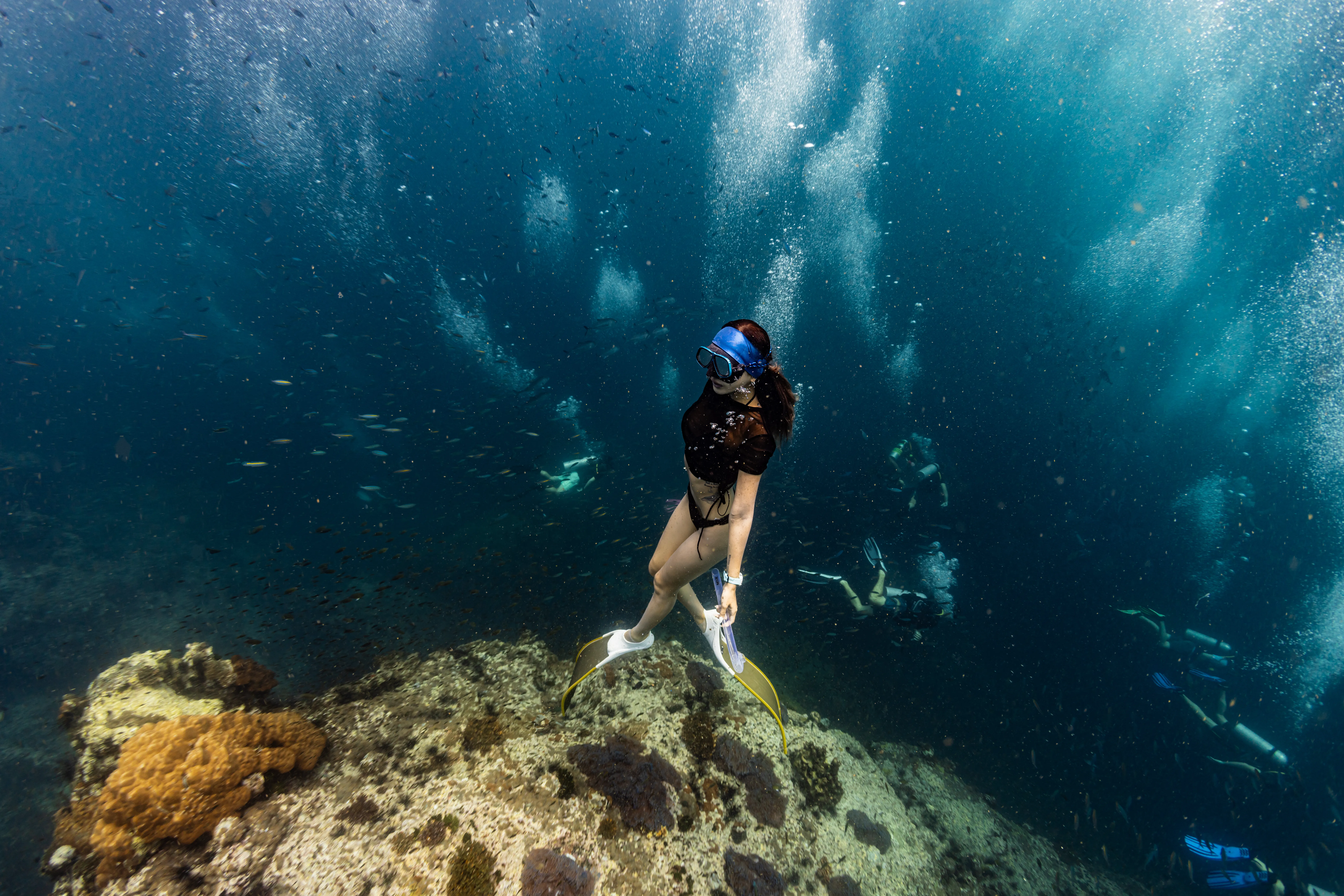
Whale sharks visit the Gulf of Thailand seasonally, with the highest concentration of sightings occurring between March and May. The primary encounter site is Sail Rock, a massive underwater pinnacle that rises from 40 meters depth to just above the surface, located roughly between Koh Samui and Koh Tao.
Chumphon Pinnacle, a deeper site north of Koh Tao, also sees whale shark activity during the same window. Both sites attract these filter feeders because the pinnacles create upwellings that concentrate plankton, the whale shark's primary food source.
What a Freediving Encounter Looks Like
When a whale shark is spotted near the surface, you have a genuine advantage as a freediver. Scuba divers are limited to their depth and cannot easily reposition. Snorkelers stay on the surface. But as a freediver, you can drop down to the whale shark's depth, match its cruising speed, and swim alongside it for as long as your breath allows.
Whale sharks typically cruise between 5 and 15 meters deep when feeding near the surface. They move slowly, perhaps 3 to 4 kilometers per hour, which means a fit freediver can keep pace for the duration of a breath hold. The experience of gliding next to an animal the size of a school bus, hearing nothing but the rush of water, is something that stays with you permanently.
We need to be honest: whale shark sightings are never guaranteed. They are wild animals with their own schedules. But during peak season, Sail Rock sees multiple sightings per week, and our private boat trips give you the flexibility to spend extended time at the site, increasing your chances significantly compared to a group tour with a fixed itinerary.
A private boat trip to Sail Rock from Koh Samui is 42,000 THB for the whole boat, carrying up to 12 guests.
3. Barracuda Schools: The Silver Walls of Sail Rock
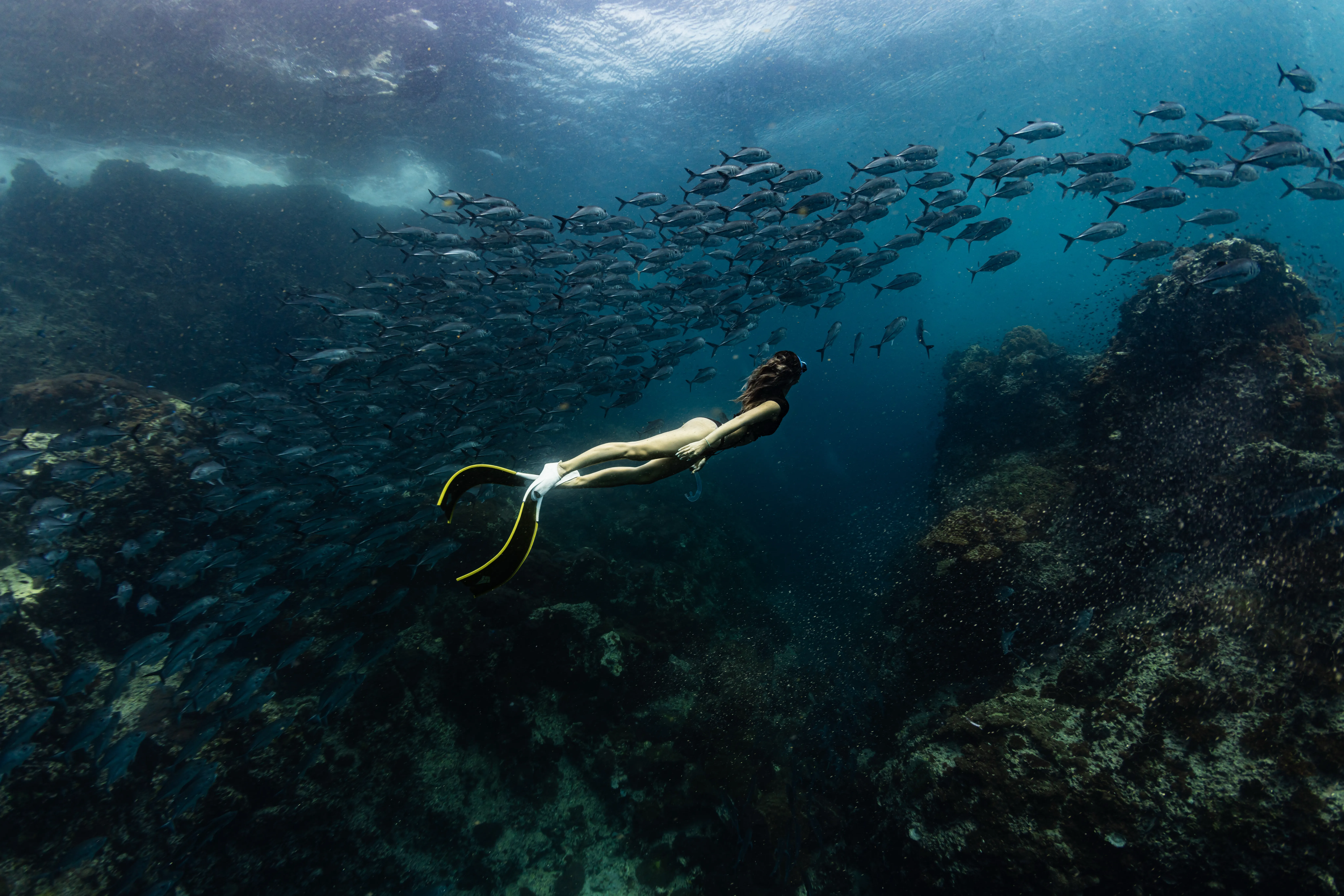
If whale sharks are the headliners at Sail Rock, barracuda schools are the opening act that sometimes steals the show. Great barracuda and chevron barracuda congregate at the pinnacle in schools that can number in the hundreds. When they form their characteristic tornado formation, circling the pinnacle in a slow rotating cylinder of silver, it is one of the most visually spectacular things you will ever see underwater.
Where to Find Them
Sail Rock is the best location by far. The barracuda schools are semi resident, meaning they hang around the pinnacle for weeks or months at a time. On a typical visit to Sail Rock, encountering a large school is almost certain during the calm season.
Smaller schools of yellowtail barracuda can also be found at Japanese Gardens near Koh Nang Yuan, and occasionally at the deeper reef sites around Koh Phangan. But nothing compares to the Sail Rock schools in terms of size and density.
Freediving with Barracuda
Barracuda are curious fish, and they respond very well to freedivers. When you drop into their school on a breath hold, they part around you and then close back in. If you remain still and relaxed, they will often circle you as if you are part of the reef. The silence of freediving is essential here. Scuba bubbles tend to scatter them to the edges, but a freediver can sit right in the middle of the formation.
They typically school between 5 and 20 meters deep at Sail Rock. Intermediate freedivers can comfortably reach the upper sections of the school, while advanced divers can drop deeper into the formation for more immersive encounters.
Despite their intimidating appearance, barracuda are not dangerous to humans. They feed on small fish and have zero interest in anything as large as a person. The teeth look alarming, but in years of diving with them, we have never had an aggressive encounter.
4. Clownfish and Anemones: The Shallow Reef Residents
Not every memorable encounter requires deep water or rare species. Clownfish and their host anemones are found on virtually every reef in the Gulf of Thailand, and their behavior is endlessly entertaining at close range. For beginner freedivers and snorkelers, clownfish encounters are often the highlight of the trip because they happen in shallow, accessible water and the fish are bold enough to interact with you.
Where to Find Them
You will find clownfish at every snorkeling and freediving site in the Gulf. The reefs around Koh Nang Yuan, the shallow bays of Koh Phangan, the coral gardens at Koh Mat Sum, and the fringing reefs of Koh Tao all support healthy anemone populations. If there is an anemone, there are clownfish. It is that simple.
The most common species in the Gulf of Thailand are the skunk clownfish (white stripe along the back), the saddleback clownfish (dark with a white saddle marking), and the Clark's anemonefish (orange and black with white bars). Finding all three species on a single trip is common.
Behavior Worth Watching
Clownfish are territorial and protective of their anemone home. When you approach, they do not flee. Instead, they puff themselves up, dart toward you, and then retreat back to the safety of the anemone tentacles. This defensive display is entertaining rather than threatening, and it means you can spend several minutes at a single anemone watching the drama unfold.
Look closely and you will often see tiny porcelain crabs hiding among the anemone tentacles, and sometimes a pair of anemone shrimp with their translucent bodies and bright spots. The anemone is an entire ecosystem in miniature.
Most anemones in the Gulf sit between 2 and 8 meters deep. Even a beginner freediver making their first few dives can reach them comfortably. A calm descent, a few seconds of observation, and a gentle return to the surface. That is all it takes to see one of the reef's most iconic relationships up close.
5. Batfish and Grouper: The Friendly Reef Residents
If you have ever wanted to feel like a fish accepts you as part of the reef, spend some time with batfish and grouper. These species are remarkably tolerant of human presence, and some individuals are so accustomed to divers and freedivers that they will approach you voluntarily.
Batfish: Curious and Social
Longfin batfish (also called spadefish) are among the most personable fish on the reef. Adults are disc shaped, silver with dark vertical bars, and they swim with a graceful, almost lazy fin movement. Juveniles are even more distinctive, with extremely long, flowing fins that make them look like autumn leaves drifting through the water.
At sites like Sail Rock and the deeper reefs around Koh Tao, batfish often approach freedivers out of pure curiosity. They will swim alongside you, hover at eye level, and seem to study your face. This is not anthropomorphism. They genuinely appear to investigate divers with sustained attention. Groups of three to six batfish following a freediver around a reef is a common sight.
You will find batfish between 5 and 25 meters at most reef sites. They are particularly common at Sail Rock, Japanese Gardens, and the pinnacles around Chumphon.
Grouper: The Reef's Landlords
Several species of grouper inhabit the Gulf's reefs, from small coral groupers the size of your forearm to giant groupers that can weigh over 100 kilograms. Giant groupers at Sail Rock and Chumphon Pinnacle have been resident for years. They know divers and freedivers, and they do not move away when you approach.
Groupers are ambush predators by nature, which means they spend most of their time sitting still on the reef, watching the world pass by. This makes them easy to observe and photograph. A large grouper tucked into a coral overhang at 10 meters depth is one of those encounters that feels like meeting the reef's oldest resident.
For freedivers, grouper encounters are special because the fish respond to the absence of noise. Scuba divers produce a constant stream of bubbles and regulator sounds that groupers tolerate but do not love. When you descend on a single breath, silent and smooth, groupers relax noticeably. They hold their position, make eye contact, and allow much closer approaches.
Making the Most of Your Encounters
The Gulf of Thailand may not have the dramatic pelagic action of the Andaman Sea or the Maldives, but what it offers is accessibility and consistency. These five animals are present on nearly every trip we run, across a variety of sites and conditions. You do not need to be an advanced freediver to see any of them.
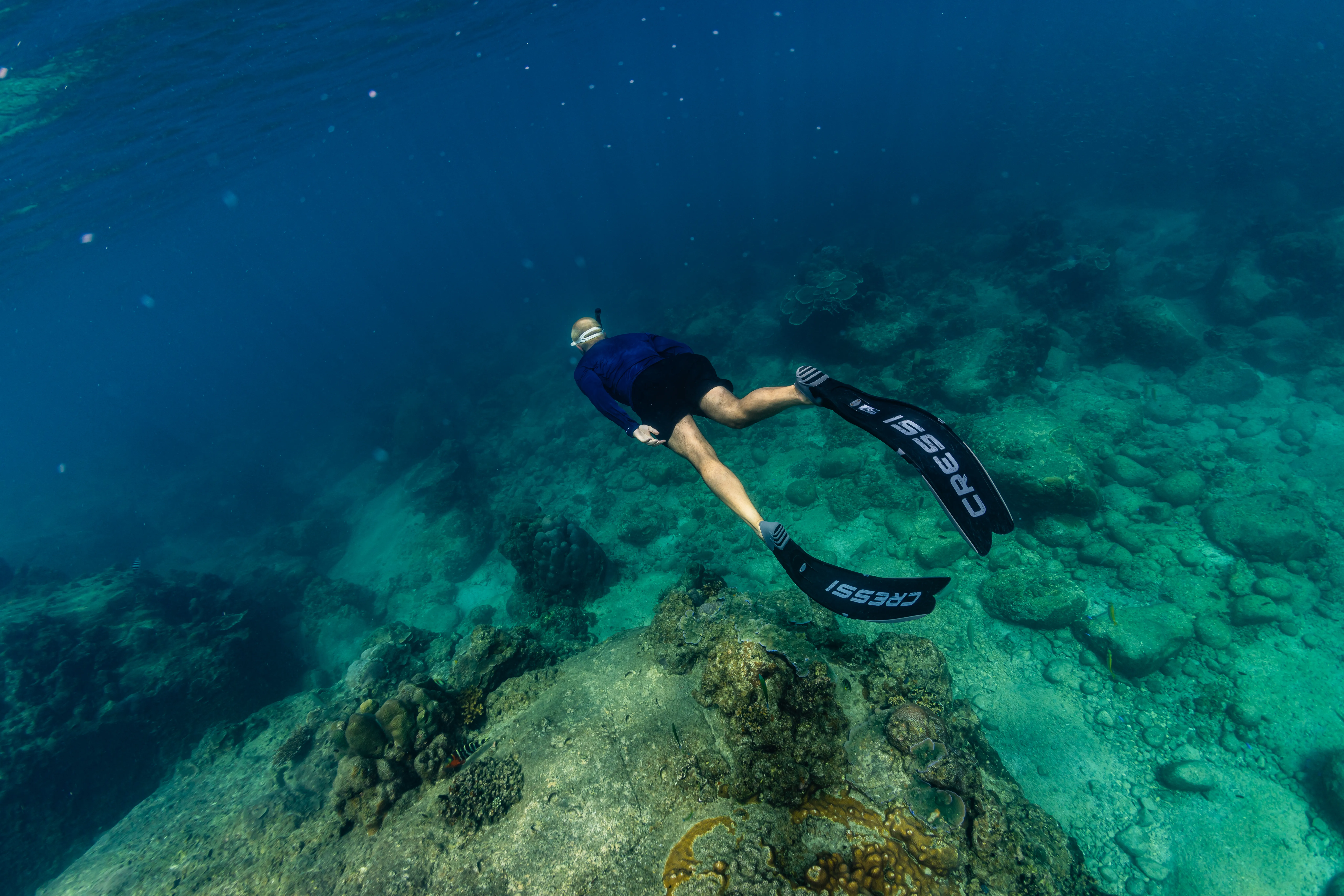
A few principles will improve every encounter. Move slowly. Do not chase. Let your exhale be complete before you dive, so you descend relaxed rather than tense. Stay horizontal in the water to minimize your profile. And give yourself time. The best encounters happen when you stop swimming and simply exist at depth for a few moments.
Our private boat trips include a freediving guide who knows where these animals tend to be on any given day. We check with the local diving community, monitor seasonal patterns, and choose our stops based on where the best encounters are happening right now. That local knowledge is something you cannot get from a guidebook or a group tour itinerary.