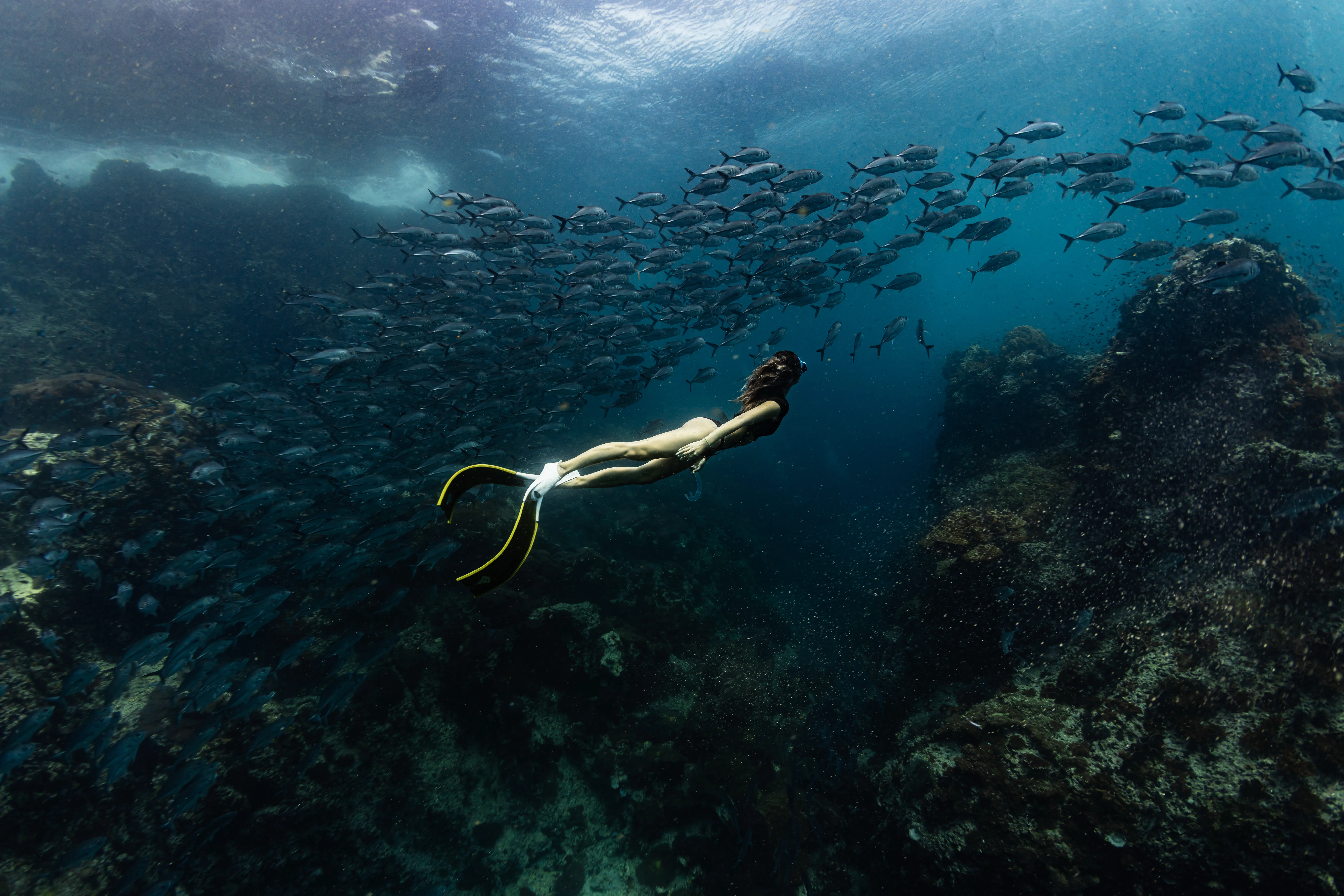
You have probably seen those videos. Someone in a wetsuit takes a single breath, turns upside down, and disappears into deep blue water. They sink past coral, past schools of fish, deeper and deeper until the surface is just a shimmer far above. Then they turn and kick back up, surfacing with a calm expression like they just went for a walk in the park.
That is freediving. And the first question most people ask when they see it is: could I actually do that?
The short answer is yes. The longer answer is that freediving is a spectrum. At one end, you have competitive athletes diving to 100 meters on a single breath. At the other end, you have someone on vacation in Thailand taking their first breath hold dive to 3 meters to get a closer look at a sea turtle. Both of those are freediving. And the second version is available to almost anyone, including you, even if you have never done anything like it before.
Freediving in Plain Language
Freediving means diving underwater on a single breath of air. No tanks. No regulators. No heavy equipment strapped to your back. You take a breath at the surface, dive down, experience whatever is below you, and return to the surface before you need to breathe again.
Humans have been doing this for thousands of years. Pearl divers in Japan and Korea, sponge divers in Greece, spear fishers across the Pacific Islands. Long before scuba gear existed, people were holding their breath and diving to remarkable depths to find food, pearls, and sponges. Modern freediving takes that same basic ability and refines it with proper technique, safety protocols, and an understanding of how your body responds to depth and pressure.
The beauty of freediving is its simplicity. You need a mask, a snorkel, fins, and your own lungs. That is it. There is something deeply appealing about entering the underwater world with nothing between you and the ocean except your own body. No hissing air from a regulator. No bubbles scaring the fish away. Just silence, weightlessness, and the sounds of the reef.
How Freediving Differs from Scuba Diving
People often compare freediving to scuba diving, but they are fundamentally different experiences. Understanding those differences helps you decide which one appeals to you more, or whether you want to try both.
With scuba diving, you carry an air tank on your back and breathe continuously through a regulator. You can stay underwater for 30 to 60 minutes at a time, moving slowly along the reef and stopping to observe anything that catches your eye. The trade off is the equipment. A full scuba setup weighs over 20 kilograms, requires certification before you can dive, and the constant hiss and bubble of the regulator creates noise that pushes some marine life away.
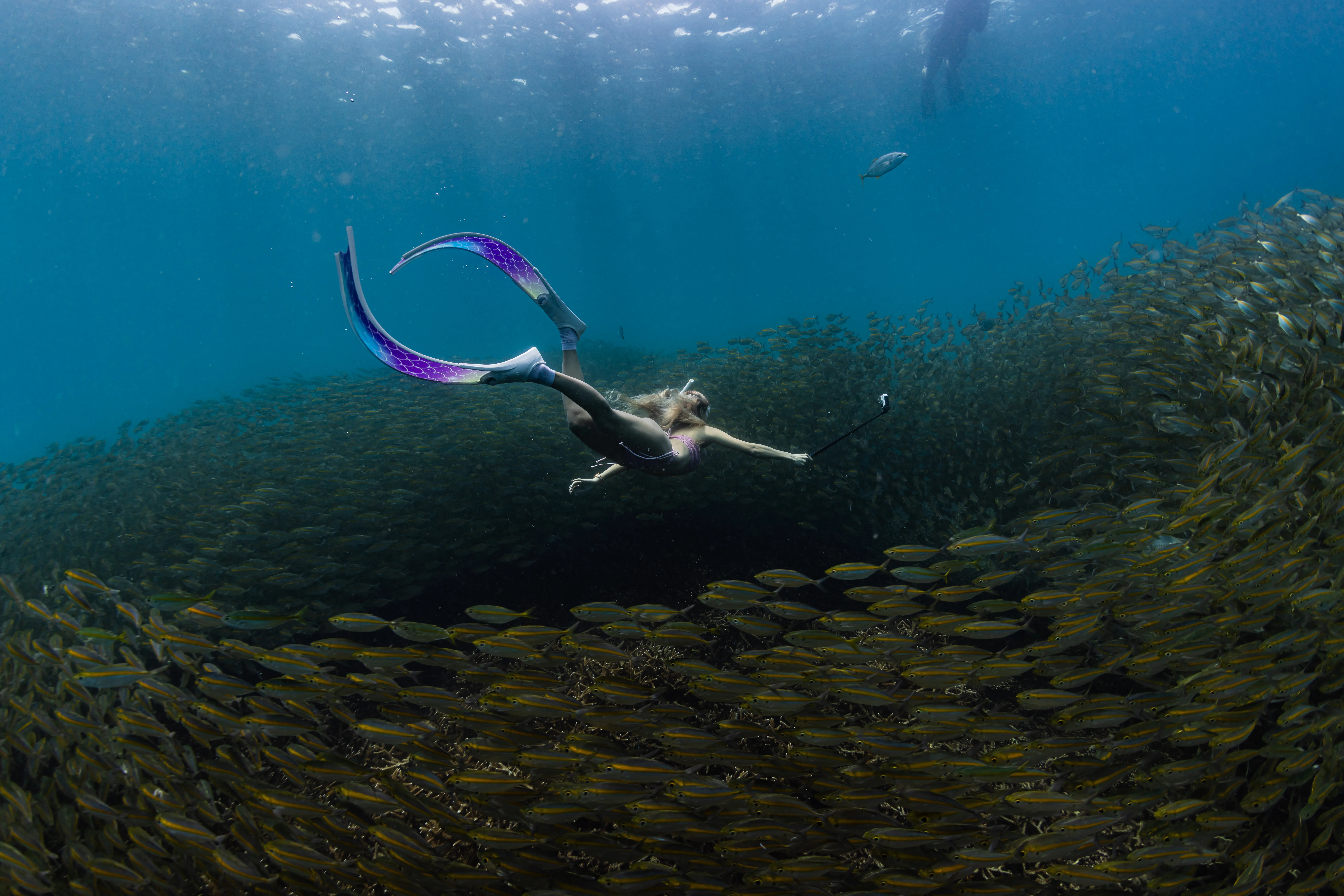
Freediving is the opposite. You carry almost nothing. Each dive lasts 30 seconds to two or three minutes depending on your experience. You move through the water with a freedom that scuba divers cannot match. And the silence is extraordinary. Fish that would flee from a scuba diver's bubbles will swim right up to a freediver and investigate. Turtles that spook at the sound of a regulator will let a freediver glide alongside them for the entire length of a reef.
There is also a meditative quality to freediving that scuba does not have. When you are holding your breath, your mind narrows to the present moment in a way that is hard to achieve in daily life. There is no room for your to do list or your email inbox when you are 8 meters below the surface on a single breath. Every dive is a small meditation, and the calm that comes with it stays with you long after you surface.
Do You Need Certification to Try Freediving
No. This is one of the biggest misconceptions about freediving, and it keeps many people from ever trying it.
Certification courses exist for people who want to learn proper technique and progress to deeper depths safely. Organizations like PADI, AIDA, and SSI offer structured courses that teach breath hold technique, equalization, safety procedures, and rescue skills. If you want to make freediving a regular part of your life, taking a course is absolutely worth the investment.
But to try freediving for the first time on vacation? You do not need any certification. A guided freediving experience with a qualified instructor is all you need. The guide teaches you the basics on the surface, watches over you in the water, and keeps everything within safe limits. You learn breathing techniques, how to equalize the pressure in your ears as you descend, and how to move efficiently with fins. Then you practice in shallow water before moving to the reef.
Most beginners are surprised by how quickly they pick it up. Within the first hour, you are typically making comfortable dives to 3 to 5 meters. By the end of a full day on the water, many first timers reach 8 to 10 meters. Some go deeper. The limiting factor is almost never your lungs. It is usually ear equalization, which is a skill that gets easier with practice.
Is Freediving Safe for Beginners
Safety is the question that matters most, and it deserves a direct answer. Freediving is safe when done properly with a qualified guide. The key word is "properly."
The risks in freediving come from pushing beyond your limits, diving alone without a safety buddy, and ignoring your body's signals. All of these are avoidable with good guidance. On a guided trip, you are never in the water alone. The guide watches your every dive, knows the signs of someone approaching their limits, and manages the depth and duration of each session based on what they observe.
For beginners, the depths involved are very manageable. You are talking about 3 to 8 meters for most first timers. At these depths, the physiological stresses on your body are minimal. The water pressure at 5 meters is roughly half of what you feel at 10 meters, and your body handles it without any special adaptation. The main thing you need to learn is equalizing the pressure in your ears, which is the same technique you use on an airplane when your ears pop during descent.
Our guides are PADI certified Master Freedivers with years of experience teaching complete beginners. They have seen every possible scenario and know how to keep things safe while still giving you an amazing experience. The safety record in guided recreational freediving is excellent, and at the shallow depths where beginners operate, the activity carries less risk than many common adventure sports.
What a Guided Freediving Experience Involves
Here is what happens when you join a guided freediving trip as a complete beginner. No surprises, no pressure, just a clear picture of the day.
Before you get in the water, the guide spends time on the boat explaining the basics. You learn how to breathe properly for freediving, which is different from how you normally breathe. Slow, deep breaths that fully fill your lungs and fully empty them. This alone is a revelation for most people, who realize they have been breathing shallowly their entire lives.
Next comes equalization. The guide shows you how to equalize the pressure in your ears by gently pinching your nose and blowing softly, or by using jaw movements that open the eustachian tubes. You practice this on the surface until it feels natural. This is the single most important skill in freediving, and getting it right makes everything else easier.
Then you enter the water. The first few dives are in shallow water, maybe 2 to 3 meters, just to build your confidence and practice the techniques you just learned. The guide is right next to you the entire time. Once you are comfortable, you move to the reef where the depth increases gradually and the marine life gets more interesting.
Each dive follows a simple pattern. Float on the surface, take your preparation breaths, take one final deep breath, duck dive below the surface, equalize as you descend, reach the bottom or your target depth, look around for a few seconds, then kick gently back to the surface. Rest for a minute or two while floating. Then do it again.
The whole experience is surprisingly relaxing. People expect freediving to feel stressful or athletic, but the reality is the opposite. The better you relax, the longer you can hold your breath and the more comfortable you feel underwater. By the end of the day, most beginners describe a profound sense of calm that they did not expect from an activity that involves holding your breath.
Why Koh Samui Is Perfect for Your First Time
Not all locations are equal for beginner freediving, and Koh Samui happens to be one of the best starting points in Southeast Asia. Several factors make it ideal.
Water temperature stays between 28 and 30 degrees Celsius year round. You do not need a thick wetsuit, which means less weight, more freedom of movement, and less anxiety about being cold. Cold water shortens breath hold times dramatically, so warm water is a genuine advantage for beginners.
The islands around Koh Samui offer sheltered bays with minimal current. Strong current is challenging even for experienced freedivers, so having calm water for your first attempts makes a huge difference. Places like Koh Mat Sum and the northern bays of Koh Phangan provide mirror flat conditions on most days.
Depth increases gradually at the beginner sites. You are not diving off a wall that drops straight to 30 meters. Instead, sandy slopes ease from 2 meters to 5 meters to 8 meters over a gentle gradient. You can choose your depth comfortably and there is always a shallow area nearby if you want to rest.
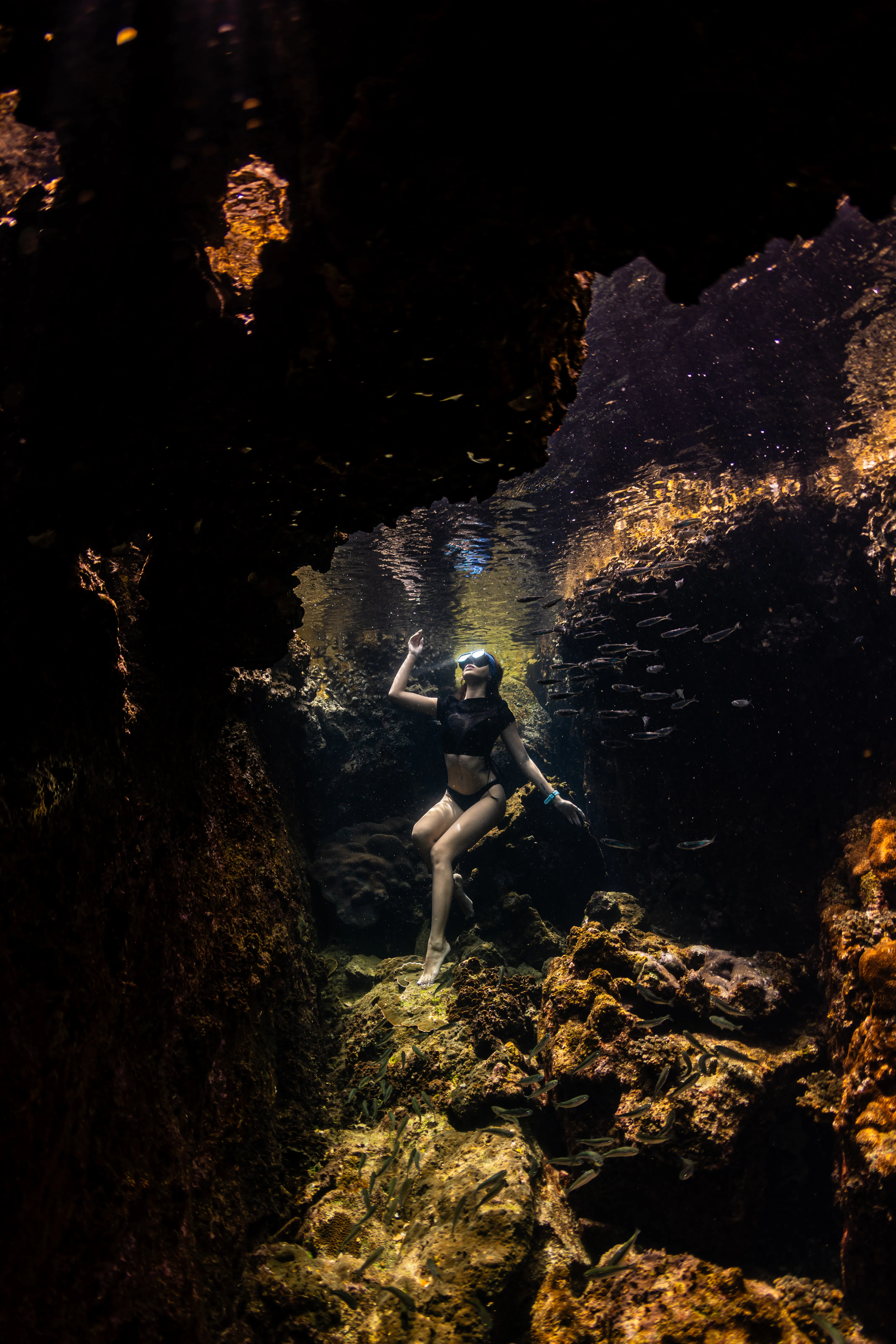
The marine life is abundant even at shallow depths. Some locations require you to go deep before you see anything interesting. Around Koh Samui, the reefs are alive from the surface down. Even at 3 meters you will see reef fish, sea cucumbers, small rays, and colorful coral. This matters for beginners because you want the reward of seeing incredible marine life without having to push your depth limits.
And finally, Koh Samui has the infrastructure. Good food, comfortable accommodation, reliable transport, and easy access to the pier. You can have an incredible freediving day and be sitting at a beachfront restaurant by evening, telling the story over pad thai and a cold beer.
Common Questions from First Timers
How long can beginners hold their breath? Most people can hold their breath for 60 to 90 seconds on their first attempt with proper breathing technique. That is more than enough for dives to 3 to 8 meters. As you relax and your body adapts throughout the day, your breath hold naturally extends.
What if I panic underwater? This is the most common fear, and it is completely understandable. The guide is always within arm's reach. If you feel uncomfortable at any point, you simply turn around and kick to the surface. You are never more than a few seconds from air. Most people who fear panic discover that the water feels calming rather than threatening once they are actually in it.
Can I freedive if I cannot swim well? You need basic water comfort. You do not need to be a strong swimmer, but you should be able to float on the surface without anxiety. The fins do most of the work during a freedive, and a life jacket is always available if you want extra security between dives.
What about my ears? Ear equalization is the biggest challenge for most beginners. Some people equalize naturally without even thinking about it. Others need to practice the technique several times before it clicks. If you have had ear surgery or chronic ear problems, mention this before the trip so the guide can adjust accordingly.
Do I need to be fit? No. Freediving is not an endurance sport. The most important qualities are the ability to relax and the willingness to try. We have guided guests in their sixties, guests who describe themselves as "not athletic at all," and guests who were genuinely nervous about putting their face in the water. Almost all of them ended the day amazed at what they accomplished.
What Happens After Your First Experience
Something interesting happens to most people after their first guided freediving session. They become quietly obsessed. Not in a dramatic way, but in a way where they find themselves watching freediving videos on their phone that evening, looking up courses in their home city, and planning their next trip around water activities.
If that happens to you, there is a natural progression. Start with a guided experience to see if you enjoy it. If you do, consider taking a PADI or AIDA Level 1 freediving course, which takes two to three days and teaches you proper technique, safety, and rescue skills. From there, the sport opens up. Deeper dives, more advanced sites, travel to freediving destinations around the world.
But all of that is optional. Many of our guests come back year after year for guided freediving trips without ever taking a formal course. They love the experience of being in the water with a guide, exploring new sites, and letting someone else handle the logistics. There is no pressure to become a certified freediver. The joy of the experience stands on its own.
Your Options from Koh Samui
We offer private boat charters that include guided freediving at several destinations from Koh Samui. For beginners, the best options are Koh Mat Sum (30,000 THB for a private boat, 15 minute ride) and Koh Phangan (30,000 THB, 45 minute ride). Both offer calm, shallow water with excellent marine life and a patient guide who will work with you at whatever pace feels comfortable.
If your group includes a mix of beginners and experienced freedivers, the Koh Tao and Koh Nang Yuan trip (38,000 THB) offers something for everyone. Beginners can enjoy the shallow coral gardens while experienced divers explore the deeper walls and swim throughs.
All charters accommodate up to 12 guests, and every trip includes full equipment, a PADI Master Freediver guide, drinks and snacks, and GoPro footage of your underwater moments. You do not need to bring anything except sunscreen, a hat, and a willingness to try something new.